
Transforming Degraded Landscapes into Enduring Forests
Throughout Appalachia, private landowners are often burdened with degraded property left behind in the wake of coal extraction, with few resources available to them toward reforesting these sites. However, engagement among private, public, and non-profit partners can help these landowners reap the environmental, financial, and recreational benefits of restoring their lands.
Establishing a Lasting Relationship from the Ground Up
Under our restoration program, landowners are actively involved in the stewardship of the land and receive initial and ongoing compensation for participation. Simply stated, landowners are paid for the growth of their trees. This model makes restoration practical and sustainable, turning previously unproductive or degraded land into a long-term ecological and economic asset.
Bosland and our project partners take full responsibility for managing and paying the full cost of reforestation in these previously mined areas. Our recovery methodology employs the Forestry Reclamation Approach (FRA), a proven, science-based method developed specifically for restoring forests on formerly mined lands. By addressing soil compaction and reintroducing native species, FRA enables long-term forest growth, improved ecosystem function, and increased carbon sequestration potential.
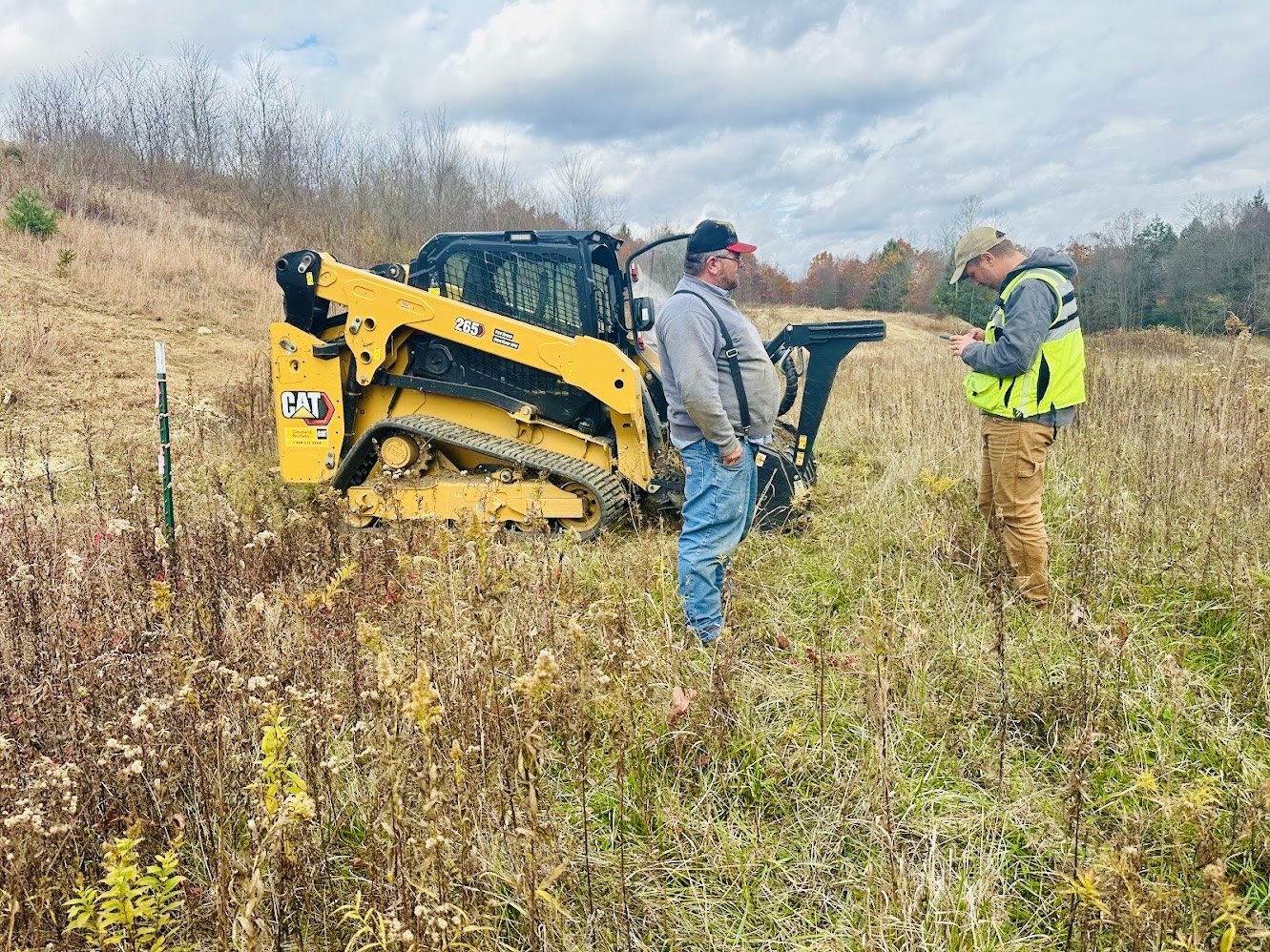
Within this approach, certified foresters and wildlife biologists create a tree prescription for the site that includes a mix of native trees, based on the site’s ecology and the owner’s land-use goals. Contractors remove invasive species and rip up the unhealthy and heavily compacted soils resulting from surface mining operations. Professionals and volunteers then replant the property.
Project partners actively monitor the site throughout each year for a minimum of five years to ensure that at least 70% of the seedlings thrive. The land is periodically inspected to ensure plant survival in the longer term, with a qualified conservation easement holder monitoring the site. After 60 years, the landowner and heirs can determine if they wish to sustainably harvest the trees, but must ensure that the site remains permanently forested.
The easement, however, permits outdoor recreation and educational opportunities, provided these activities don’t disrupt the development of a healthy, biodiverse forest ecosystem.
Reconnecting Fragmented Landscapes
A quick look at two of our current projects highlights our model’s emphasis on full lifecycle involvement, from landowner enrollment and site design to implementation and long-term forest stewardship, to enhancing the health of adjacent forested areas through remediation of the degraded landscape.
Barbour County, West Virginia, is situated in the scenic north-central region of West Virginia, along the western edge of the Allegheny Plateau. Near the county seat of Phillippi, we’re working with a group of neighboring landowners on reforesting approximately 162 acres of formerly surface-mined land.
In the upper West Branch Susquehanna basin in Pennsylvania’s Clearfield County, we’re working with a private landowner to restore approximately 130 acres of former surface mine land to native forest. Over time, the restored forest will enhance wildlife habitat, improve water quality in Chest Creek, and sequester significant carbon.
In Spring 2026, our team prepared both sites and planted more than 198,000 native seedlings.
With continuing monitoring and maintenance, both projects will increase native forest cover and expand wildlife habitat. As the forest matures, it will provide long-term carbon sequestration and strengthen watershed and ecosystem resilience.
Although the current owners are unlikely to see the full restoration of their lands, they understand that their actions can make a profound difference in the lives of future generations.
Why Partnerships are Critical
Recently, we established a new 20-year partnership with the Suntory Group in a united effort to enable long-term landowner participation, expand and sustain local hardwood forests, and build long-term relationships for their conservation. Planting species native to the region, including white oak, also ensures the healthy regeneration of this essential resource that Suntory uses in crafting barrels that age some of the world’s highest-quality whiskey.
Bosland Growth is also supported by a broader coalition of funding and technical partners, including the USDA Forest Service, USDA Natural Resources Conservation Service, U.S. Endowment for Forestry & Communities, Susquehanna River Basin Commission, Richard King Mellon Foundation, Invest Appalachia, and the National Fish and Wildlife Foundation.
We firmly believe that degraded mine lands don’t have to stay that way. By working with partners and landowners in applying proven restoration methods, we’re returning these sites to productive use by establishing healthy, resilient forests that can provide ecological and economic value for decades to come.
