
For more than 200 years, Western Pennsylvania’s bituminous coal mines provided much of the fuel to power the nation’s industrial and economic expansion. This legacy, however, has been marred by thousands of acres of desecrated lands, endangered waterways, and disrupted ecosystems due to unregulated extraction practices and abandonment of spent mines.
That’s why, working with our public, non-profit, and private partners, Bosland Growth is committed to restoring and conserving land degraded by surface mining in this region of Pennsylvania—and throughout Appalachia.
In April 2026, we completed two complementary projects in Cambria County, Pennsylvania at Basking Hill Nature Reserve and in Northern Cambria Borough. These projects, located along the West Branch Susquehanna River, demonstrate how reforestation can help to rebuild ecological integrity, improve watershed health, and create long-term public benefits.
Restoring the Land along the Waterway
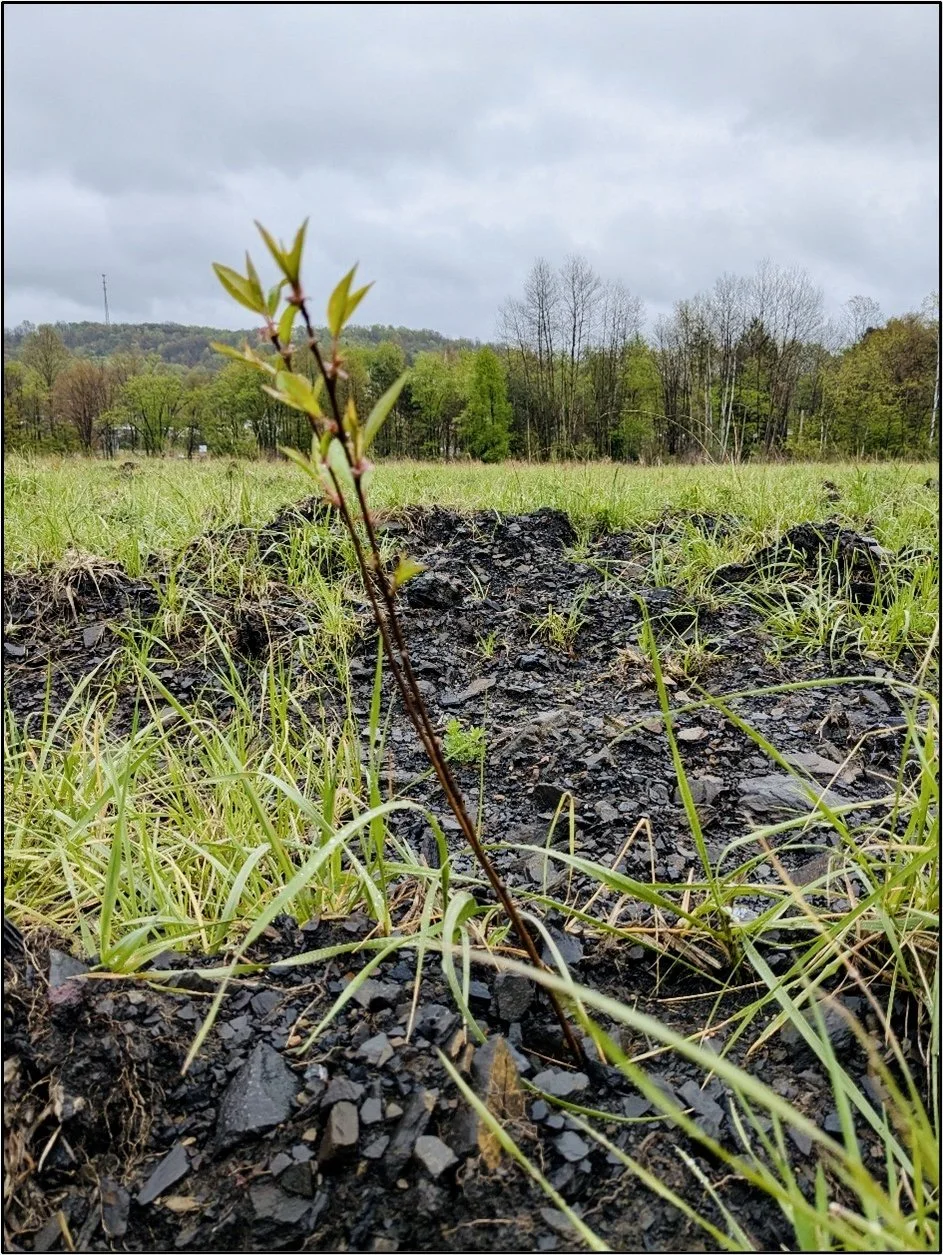
Basking Hill Nature Reserve comprises approximately 365 acres, acquired and established by the Western Pennsylvania Conservancy (WPC). The Reserve features steep forested slopes, reclaimed mine land, old fields, and approximately 1.4 miles of frontage along the river. A few miles away, Northern Cambria Borough recently acquired about 90 acres along the river with assistance from the WPC. Of those 90 acres, 43 acres were reforested as part of the project.
This site was once the location of a large coal mine waste pile, which was removed and reclaimed prior to the borough’s acquisition of the property.
Located within the headwaters portion of the West Branch’s watershed, these two sites are among dozens affected by previous mining activities in Cambria County. Yet, in the past few decades, government agencies, non-profit organizations, and communities have worked to address impacted landscapes. In fact, upstream acid mine drainage treatments have transformed this previously acidic, iron-laden stretch of the West Branch into clean, cold Class A Wild Trout Waters.
What Bosland, our partners, and volunteers have now brought to these sites is the protection provided by targeted reforestation.
Preparing the Land
Even after federal regulations required some reforms, natural reforesting of formerly surface-mined sites is extremely rare. Surface mining practices, such as the creation of mine benches to level the land surface for excavation, have resulted in heavily compacted soils, aggressive grasses, and invasive shrubs that don’t support natural regeneration of native forests. In their current state, these lands cannot sequester carbon, absorb and retain water, or provide habitat for native plant and wildlife species.
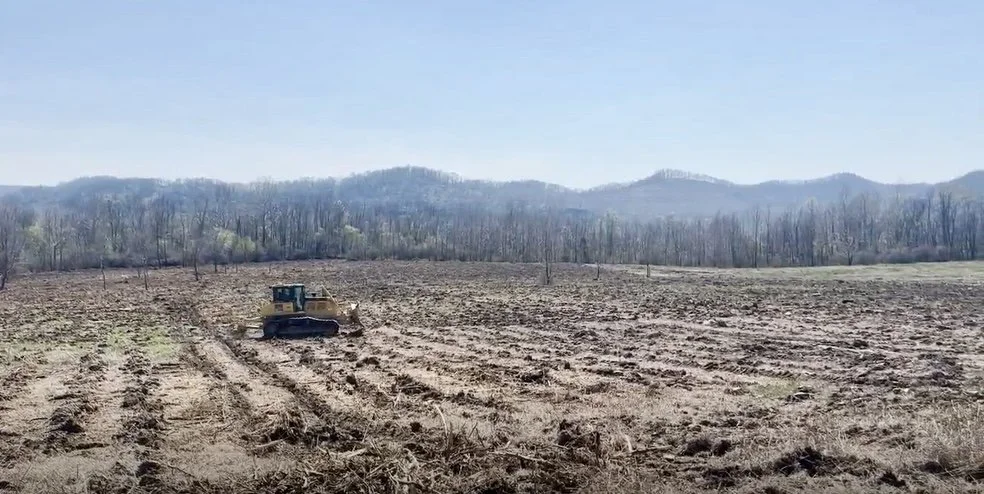
Earlier this year, our team and contractors focused on the foundational work required to bring these landscapes in the Reserve and within the borough back to life. Activities included intensive invasive species management and deep tillage to break up decades of soil compaction; restoring soil stabilization, structure, and health; improving water infiltration; and creating the conditions necessary for new forests to take hold.
Setting the Stage for the Future
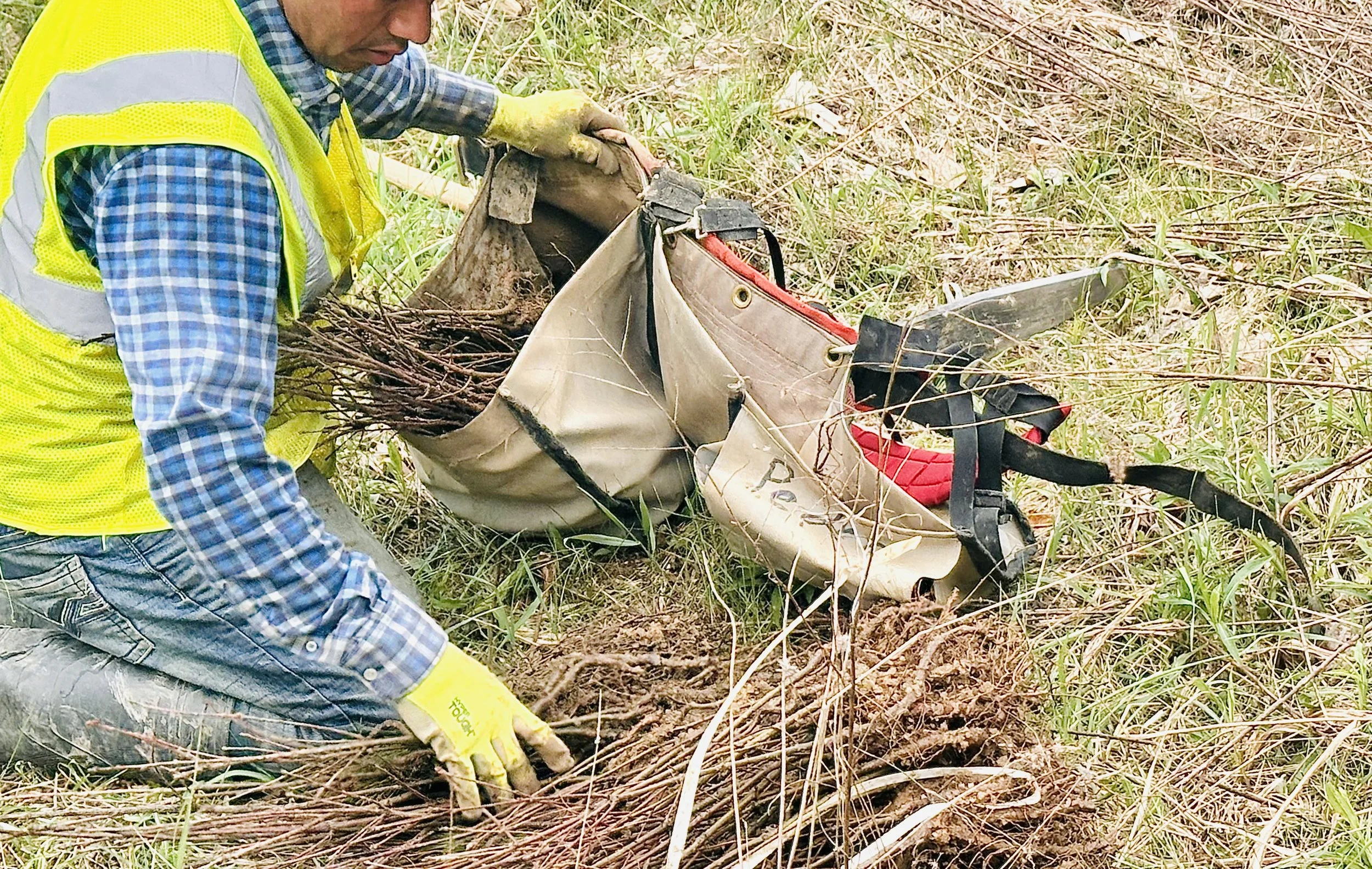
In partnership with Williams Forestry & Associates, more than 29,000 seedlings have been planted on 43 acres of the borough site, and nearly 25,000 have been planted on 33 acres of the Reserve. The scale of this effort is powerful. Areas that once appeared barren are now prepared to support thousands of native seedlings and, over time and with diligent monitoring, a fully functioning forest ecosystem. Monitoring is a critical component of reforestation projects to ensure seedling survival, stocking levels, growth, and overall health remain on track to achieve forest establishment goals. Bosland and project partners collect annual monitoring data to evaluate site conditions and guide adaptive management activities such as targeted invasive species control, supplemental planting, and other actions needed to promote long-term stand development.
With this restoration comes expanded community access to high-quality outdoor resources, including fishing and recreation. In addition to reducing runoff and adding to long-term watershed resilience, the forested restoration will also benefit the community through long-term ecological resilience and support for wildlife, as well as the strengthening of riparian forest connectivity.
The Importance of Teamwork
While these efforts and anticipated outcomes are significant, they only tell part of the story. What stands out is the level of coordination and care behind each acre, from site preparation and species selection to the timing and execution of planting. While we believe our model for large-scale ecological restoration, which combines scientific forestry practices, community engagement, and innovative funding to transform degraded lands into thriving forests, restoration at this scale requires more than technical expertise. It demands a long-term commitment to stewardship of these lands and alignment across partners.
Beyond our project partnership with the Western Pennsylvania Conservancy and Williams Forestry & Associates, we work alongside a broad network of government agencies, foundations, conservation organizations, and corporate partners to develop and implement our mine land restoration program. Funding for the work on the Basking Hill and Borough properties has been provided by the Suntory Group, USDA Forest Service, National Fish and Wildlife Foundation, Richard King Mellon Foundation, and the U.S. Endowment for Forestry and Communities.
Today, there are about one million acres of these reclaimed or legacy mine sites across Appalachia. Although the restoration may be difficult, partnerships on projects like these in Cambria County highlight the significant opportunities to restore the full ecological and local economic potential of these lands.
